

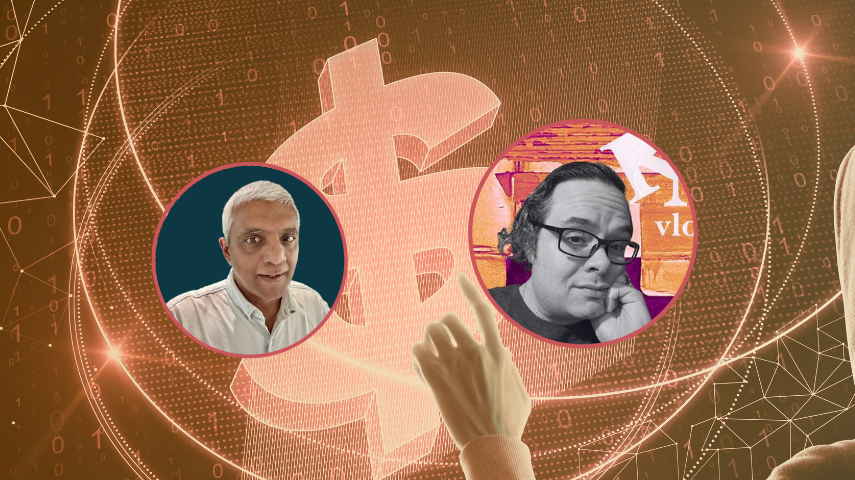
I joined Varn Vlog to explore a question that keeps resurfacing in global finance. If trust in institutions is weakening and debt levels are rising, why does the dollar remain so hard to dislodge?

Rather than focusing on short-term market moves, the conversation looks at the structural forces that keep the dollar embedded in global trade. We discuss why previous challenges, from the euro to BRICS, have struggled to gain traction, and why trust and liquidity matter more than political intent when it comes to reserve currencies.
A significant part of the discussion focuses on stablecoins and digital assets. Instead of undermining the dollar, dollar-backed stablecoins are extending its reach, particularly in parts of the world where traditional banking systems no longer serve everyday trade efficiently. This raises uncomfortable questions about how monetary power is shifting without deliberate policy design.
We also step back to examine a deeper transition under way. Finance is moving from institution-led markets towards networked systems where access, participation, and functionality increasingly define value. This shift has implications not only for currencies, but for education, employment, and how societies adapt to technological change.
The conversation is less about predicting collapse and more about understanding mutation. The global financial system is not breaking apart, but reorganising itself in ways that are easy to miss if we focus only on headlines.
Here’s what we discussed:
- Why the US dollar remains dominant despite rising distrust and debt.
- Why alternatives to the dollar struggle to scale beyond rhetoric.
- How stablecoins are reshaping payments and extending dollar influence.
- What a shift from markets to networks means for finance and society.
Listen to the full conversation below.