

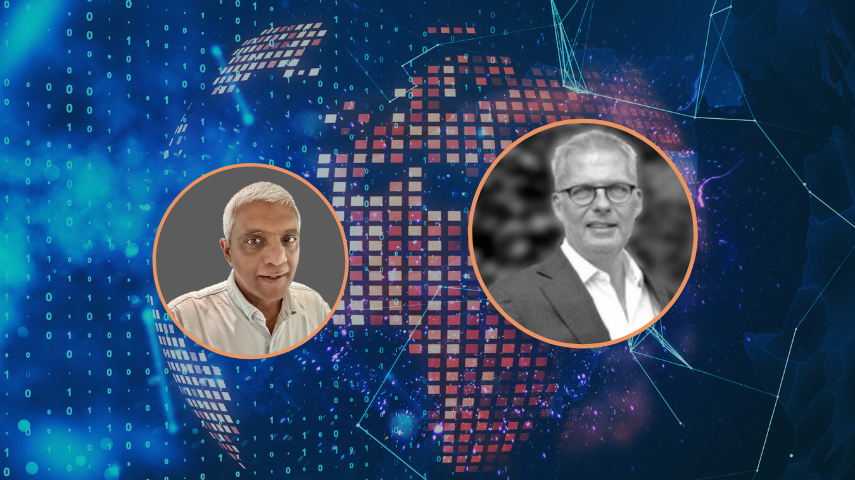
I joined the Chris on the Culture Matters Podcast to explore how cultural diversity influences the way we build institutions and operate across borders.

I was born in Kuala Lumpur and built my career in Singapore, two multicultural societies where Chinese, Indian, Malay and Western influences intersect. Growing up in that environment created an instinctive comfort with plural identities and cross-cultural engagement.
Ethnically, I am Indian, but culturally my reference points are far more hybrid, shaped by Southeast Asia’s cosmopolitan fabric. In international business, those distinctions matter because cultural assumptions often shape trust and leadership perception long before credentials do.
We also discussed the origins of The Asian Banker, now TAB Global, the research and publishing platform I founded nearly three decades ago. What began as a banking publication has grown into a global institution spanning research, advisory and leadership programmes across Asia, the Middle East, Africa and Europe.
Banking drew my attention because it is both universal and institutional. It touches individuals from birth to death and sits at the centre of economic life. Despite public scepticism, it remains structurally indispensable.
A central theme in our discussion was intermediation.
Banks intermediate money. Platforms intermediate data. Even as technology enables peer-to-peer transactions through digital payments and cryptocurrencies, intermediaries continue to re-emerge. Trust, regulation and infrastructure still require institutional anchors. Intermediation is evolving rather than disappearing.
This structural transition is something I explore more deeply in The Great Transition, where I examine how finance is moving from legacy institutional architecture towards more distributed, user-empowered systems.
We also explored how innovation often accelerates in emerging markets. Without legacy infrastructure, regions such as Africa, India and China have leapfrogged into mobile payments, real-time transfers and wallet ecosystems, reshaping financial services adoption.
Diversity, in this context, becomes a growth strategy. Scaling internationally requires operating outside one’s comfort zone and understanding unfamiliar norms and behaviours.
We closed with three reflections on cultural competence:
- Start with the outcome you want from cross-cultural engagement.
- Be conscious of how you project yourself.
- Develop a personal philosophy about humanity and coexistence.
Culture, finance and technology are evolving together. Understanding their intersection is essential for anyone operating in global business today.
Here’s what we discussed:
- Cultural identity in international business
- Diversity as a growth driver
- The enduring role of intermediaries
- Leapfrog innovation in emerging markets
- Building cultural competence
Watch the full conversation:
Listen to the full podcast: